Choosing a heart bypass surgeon is an important decision for patients diagnosed with coronary artery disease. Understanding the condition, available treatment options, the surgeon’s experience, and the hospital’s cardiac care facilities can help patients make informed decisions about their treatment.
For people searching for the best heart bypass surgeon in Ahmedabad, it is important to look beyond online rankings and promotional claims. Relevant surgical experience, specialist qualifications, experience with coronary artery bypass grafting (CABG), access to a multidisciplinary cardiac team, and clear communication are all factors worth considering.
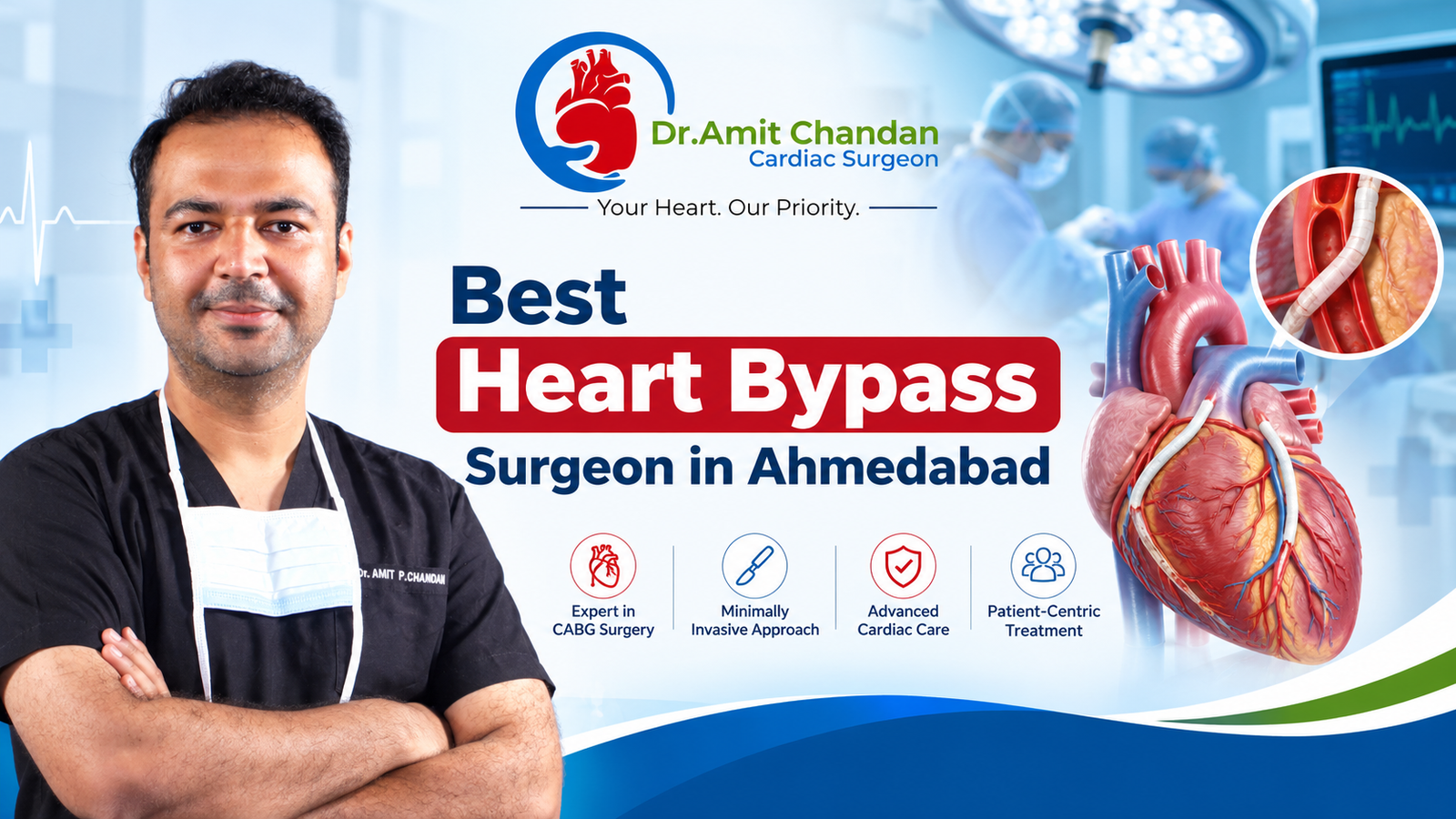
Dr. Amit Chandan is a Consultant Cardiothoracic and Vascular Surgeon in Ahmedabad whose areas of expertise include coronary artery bypass grafting (CABG), minimally invasive cardiac surgery, valve surgery, and other advanced cardiac procedures. His professional profile is available on the official Marengo CIMS website.
What Is Heart Bypass Surgery?
Heart bypass surgery, medically known as coronary artery bypass grafting (CABG), is a surgical procedure used to improve blood flow to the heart muscle when coronary arteries are narrowed or blocked.
Coronary arteries supply oxygen-rich blood to the heart. When fatty deposits accumulate inside these arteries, the resulting narrowing can restrict blood flow and cause coronary artery disease.
During CABG surgery, a cardiac surgeon uses a healthy blood vessel from the patient’s chest, arm, or leg to create an alternative route around a blocked section of a coronary artery. This helps blood reach the heart muscle through the bypass graft.
Heart bypass surgery may be recommended for selected patients with significant coronary artery disease, depending on factors such as the location and extent of blockages, symptoms, heart function, other medical conditions, and previous treatments.
When Is Heart Bypass Surgery Needed?
Not every patient with coronary artery disease needs bypass surgery. Treatment depends on the severity of the disease and the patient’s overall clinical condition.
A cardiologist and cardiac surgeon may consider CABG when a patient has:
- Significant narrowing or blockage in multiple coronary arteries.
- Disease affecting important coronary artery locations.
- Persistent symptoms despite appropriate medical treatment.
- Certain patterns of coronary artery disease where bypass surgery may offer advantages over other treatment options.
- Coronary artery disease accompanied by reduced heart function in selected cases.
- Complex coronary anatomy that requires a detailed assessment of treatment options.
Depending on the diagnosis, treatment may involve medication, lifestyle changes, angioplasty and stenting, CABG, or a combination of approaches.
A specialist evaluation helps determine which option is appropriate for the individual patient.
How to Choose the Best Heart Bypass Surgeon in Ahmedabad
Patients often search online for the best heart bypass surgeon because they want an experienced specialist who understands their condition and can explain the available treatment options.
Rather than relying on rankings alone, consider the following factors when evaluating a CABG surgeon.
1. Specialist Qualifications and Training
Heart bypass surgery requires specialized training in cardiothoracic or cardiovascular surgery.
Check the surgeon’s professional qualifications, specialist training, current hospital affiliation, and experience treating coronary artery disease.
These details can help establish whether the surgeon’s background is relevant to the procedure being considered.
2. Experience With CABG Surgery
Experience with coronary artery bypass grafting is an important factor when choosing a cardiac surgeon.
Patients can ask about the surgeon’s experience with their specific type of coronary artery disease, the surgical techniques that may be suitable, and how the treatment plan will be determined.
The complexity of CABG varies between patients, so experience with the relevant procedure and clinical situation is particularly important.
3. Knowledge of Different Bypass Techniques
CABG can be performed using different surgical approaches.
Depending on the patient’s condition, the surgeon may consider conventional bypass surgery, off-pump CABG, or minimally invasive coronary artery bypass surgery.
The availability and suitability of these approaches depend on the patient’s coronary anatomy, overall health, and surgical requirements.
A good consultation should explain why a particular approach is being considered rather than assuming that one technique is best for everyone.
4. Hospital Facilities and Cardiac Care Team
Heart bypass surgery involves more than the operation itself.
The wider cardiac team may include cardiologists, cardiac anaesthesiologists, perfusionists, intensivists, nurses, and rehabilitation professionals.
Patients should consider the hospital’s cardiac operating facilities, intensive care capabilities, availability of related specialists, and postoperative support.
Coordination between the surgical team and other healthcare professionals is an important part of cardiac care.
5. Clear Communication and Patient Support
A heart surgery diagnosis can create uncertainty for patients and their families.
The surgeon should explain the diagnosis, the reason for recommending bypass surgery, the available alternatives, potential risks, and the expected recovery process.
Patients should feel comfortable asking questions and discussing concerns before making decisions about their treatment.
Dr. Amit Chandan: Heart Bypass Surgery in Ahmedabad
Dr. Amit Chandan is a Consultant Cardiothoracic and Vascular Surgeon associated with Marengo CIMS Hospital in Ahmedabad. His qualifications include MBBS and DNB in Cardiothoracic Surgery.
His official professional profile lists coronary artery bypass grafting, mitral valve repair and replacement, aortic valve replacement, minimally invasive cardiac surgery, redo cardiac surgery, and other advanced cardiac procedures among his areas of practice.
His official website also describes his work in adult cardiac surgery, minimally invasive cardiac surgery, and robotic cardiac surgery.
For patients researching a heart bypass surgeon in Ahmedabad, reviewing a surgeon’s training and procedure-specific experience can help prepare them for a more informed consultation.
The appropriate surgeon and surgical approach should always be evaluated in the context of the patient’s diagnosis, medical history, and individual treatment needs.
What Are the Different Types of Heart Bypass Surgery?
The term heart bypass surgery can refer to different surgical techniques. The approach depends on the patient’s condition and the surgeon’s assessment.
Conventional CABG Surgery
Conventional CABG is a widely established surgical approach for coronary artery disease. The surgeon creates bypass grafts to route blood around blocked coronary arteries.
Depending on the procedure, a heart-lung machine may be used to support circulation while the operation is performed.
Off-Pump Bypass Surgery
Off-pump CABG, sometimes called beating-heart bypass surgery, is performed while the heart continues beating, without using a heart-lung machine to support circulation during the bypass grafting.
This technique may be suitable for selected patients. The decision depends on coronary anatomy, the patient’s condition, and the surgeon’s clinical judgment.
Minimally Invasive Heart Bypass Surgery
Minimally invasive CABG uses smaller surgical access points for selected patients instead of the larger incision used in conventional approaches.
It may offer potential advantages such as smaller incisions and a different recovery experience. However, not every patient is suitable for minimally invasive bypass surgery.
A cardiac surgeon evaluates the disease pattern, coronary anatomy, overall health, and procedural requirements before recommending this approach.
Robotic-Assisted CABG
Robotic-assisted coronary artery bypass grafting (CABG) is an advanced surgical approach that uses robotic technology to assist the surgeon during selected heart bypass procedures. Depending on the patient’s condition and surgical plan, it may allow the surgeon to perform certain steps through smaller incisions.
The suitability of robotic-assisted CABG depends on the location and extent of coronary artery blockages, the patient’s overall health, and the complexity of the procedure. Not every patient is a suitable candidate for this approach.
A cardiac surgeon evaluates the patient’s diagnostic reports and clinical condition to determine whether robotic-assisted CABG, conventional bypass surgery, or another treatment option is most appropriate.
Arterial Bypass Surgery
Arterial bypass surgery is a type of coronary artery bypass grafting (CABG) in which arteries are used as grafts to create new routes for blood to flow around blocked coronary arteries.
Two important arterial grafts used in heart bypass surgery are the left internal mammary artery (LIMA) and the right internal mammary artery (RIMA). These arteries are also commonly called the left and right internal thoracic arteries.
Total arterial bypass surgery refers to a bypass procedure in which arterial grafts are used for all planned bypass grafts. In selected patients, both LIMA and RIMA may be used as part of the surgical plan.
What Are the Benefits of Heart Bypass Surgery?
For appropriately selected patients, CABG can improve blood flow to the heart muscle and help manage symptoms associated with coronary artery disease.
Potential benefits may include:
- Relief from angina or chest discomfort in appropriate patients.
- Improved blood supply to areas of the heart muscle.
- Improved quality of life for selected patients.
- Benefits in certain patterns of coronary artery disease compared with other treatment strategies.
- Support for long-term management when combined with appropriate medication and lifestyle changes.
The expected benefits vary according to the patient’s condition, the severity of coronary artery disease, heart function, and other health factors.
Bypass surgery does not eliminate coronary artery disease entirely. Ongoing medical care, prescribed medication, follow-up appointments, and heart-healthy lifestyle changes remain important after surgery.
What Are the Risks of CABG Surgery?
Heart bypass surgery is a major operation, and patients should understand both its potential benefits and risks.
Possible complications include bleeding, infection, abnormal heart rhythms, stroke, kidney problems, blood clots, and complications associated with anaesthesia. Other risks depend on the patient’s health and the complexity of the operation.
The surgical team evaluates the patient’s medical history, heart function, other illnesses, and diagnostic reports to assess individual surgical risk.
Before proceeding, patients should discuss the expected benefits, possible complications, alternative treatments, and recovery requirements with their treating team.
How Long Does Recovery After Heart Bypass Surgery Take?
Recovery after CABG varies from person to person.
Hospital recovery generally includes close monitoring, pain management, gradual movement, breathing exercises, and assessment of the patient’s condition.
After discharge, recovery may involve:
- Following prescribed medication instructions.
- Caring for the surgical wound as advised.
- Increasing physical activity gradually.
- Attending scheduled follow-up appointments.
- Participating in cardiac rehabilitation when recommended.
- Following dietary and lifestyle guidance.
- Avoiding activities restricted by the treating team.
- Performing prescribed breathing exercises as advised by the surgeon.
Some patients return to routine activities sooner than others. Recovery depends on the type of surgery, overall health, complications, and individual progress.
Patients should follow their surgeon’s instructions rather than comparing their recovery timeline with someone else’s.
What Should You Ask a Heart Bypass Surgeon Before Surgery?
A consultation is an opportunity to understand the diagnosis and make an informed decision about treatment.
Patients may find it useful to ask:
- Why is CABG being recommended for my condition?
- Are medication, angioplasty, or other treatments reasonable alternatives?
- How complex is my coronary artery disease?
- Which bypass technique may be appropriate for me?
- Am I a candidate for minimally invasive or off-pump CABG?
- What are the main risks in my individual case?
- What should I expect during hospital recovery?
- Will I need cardiac rehabilitation?
- Which medications and lifestyle changes will be important after surgery?
- What follow-up care will I require?
The answers should be based on the patient’s reports, examination, and clinical assessment.
Why Follow-Up Care Matters After Bypass Surgery
Heart bypass surgery treats the effects of significant coronary artery blockages, but patients still need ongoing care to manage cardiovascular risk.
After surgery, the treating team may recommend medication, blood pressure and cholesterol management, diabetes control where relevant, smoking cessation, physical activity, dietary changes, and cardiac rehabilitation.
Regular follow-up helps the healthcare team monitor recovery and manage risk factors that could affect future heart health.
Patients should not stop or change prescribed medicines without discussing the decision with their treating clinician.
Choosing Heart Bypass Surgery in Ahmedabad
Ahmedabad has hospitals and specialist cardiac teams that evaluate and treat coronary artery disease.
When comparing heart bypass surgery services in Ahmedabad, patients can consider the surgeon’s qualifications, experience with CABG, available surgical approaches, hospital facilities, intensive care support, and postoperative care arrangements.
It is also useful to ask how the surgeon works with cardiologists and other specialists to evaluate treatment options.
An informed decision should be based on clinical suitability, professional expertise, and a clear understanding of the recommended treatment—not solely on online rankings or promotional claims.
Conclusion
Choosing a heart bypass surgeon is an important step for anyone diagnosed with significant coronary artery disease. Understanding the surgeon’s qualifications, experience with CABG, available surgical techniques, hospital support, and approach to patient communication can help patients prepare for an informed treatment decision.
Dr. Amit Chandan is a Consultant Cardiothoracic and Vascular Surgeon in Ahmedabad whose listed areas of practice include CABG, minimally invasive cardiac surgery, valve surgery, aortic surgery, and other advanced cardiac procedures.
For patients researching the best heart bypass surgeon in Ahmedabad, the most useful next step is to discuss their diagnostic reports, treatment alternatives, individual surgical risks, and expected recovery with a qualified cardiac surgical team.
Every patient is different, and the most appropriate treatment should be determined through individual medical evaluation and shared decision-making with the treating healthcare professionals.
Consider specialist qualifications, experience with CABG, familiarity with the relevant surgical technique, hospital facilities, multidisciplinary support, and the quality of communication during consultation. Ask questions about your diagnosis and the procedure being recommended.
CABG creates new routes for blood to reach the heart muscle around blocked arteries, but it does not remove every underlying cause of coronary artery disease. Medication, follow-up care, and management of cardiovascular risk factors remain important.
Dr. Amit Chandan’s professional profile at Marengo CIMS Hospital lists coronary artery bypass grafting (CABG) among his procedures and treatments. Patients can consult his official profile and contact the hospital to discuss their individual condition and appointment options.